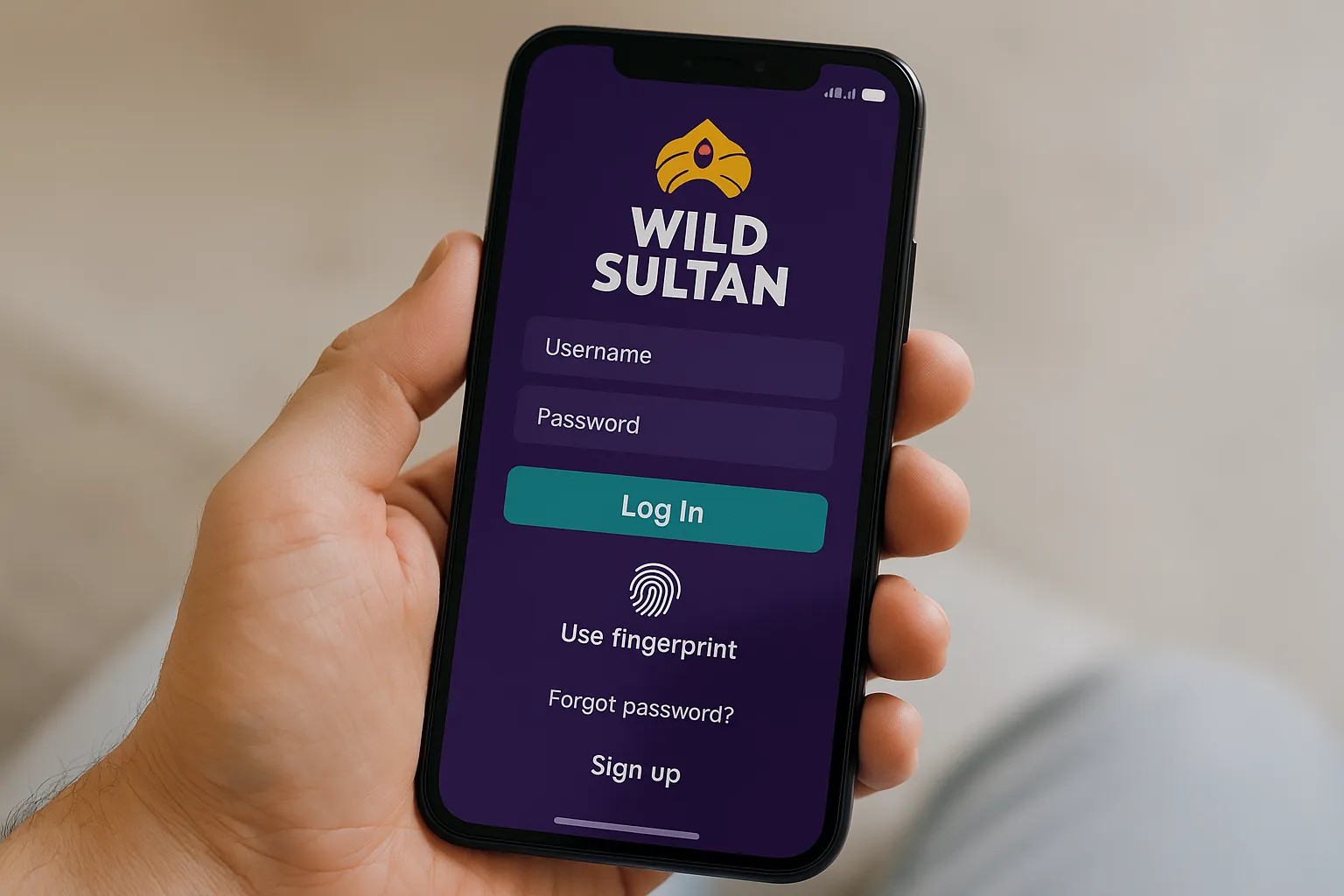
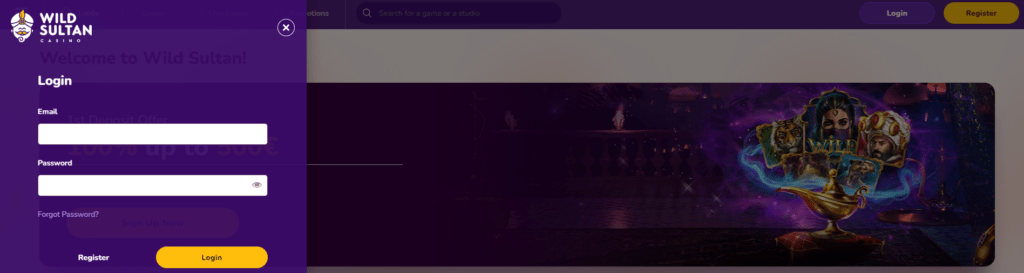
Access Wild Sultan Casino Login

In France, access to your player area is quick: credentials, verification, then security and session settings.

Play Now!
Slot Fortune Gems 2

Table of contents

  • The Dog House Megaways Slot
  • Lucky Joker 10 Extra Gifts Slot
  • Sword of Ares Slot
  • Floating Dragon Hold & Spin Slot
  • Leprechaun Riches Slot
  • Fruit Coctail Slot
  • The Dog House Megaways Slot
  • Sword of Ares Slot
  • Fruit Million Slot
  • The Dog House Megaways Slot
  • Fruit Box Slot
  • Big Fisherman Slot
  • Seven Books Unlimited Slot
  • Wild Sultan Fortune Slot
  • Sword of Ares Slot
  • Floating Dragon Hold & Spin Slot
  • 9 Mad Hats Slot
  • Floating Dragon Hold & Spin Slot
  • Big Bass Splash Slot

Understanding Wild Sultan Casino Login To Connect

Before entering anything, set the context: you are simply trying to enter your space, not to 'hack' a system or bypass controls. In practice, the platform offers a classic process: identification, device confirmation, then access to account menus.

Play Now!
login 1

Imagine the scene: you have five minutes before going out, you just want to check a balance or the status of a request. The best approach is to keep a cool head and get straight to the point: prepare your credentials, check that your keyboard is in the correct mode (uppercase, language), then proceed step by step without multiplying attempts. Too many rapid consecutive attempts often trigger automatic protections, which prolongs everything.

As always, access is reserved for adults and must be done in compliance with the rules applicable in France. If you feel that you are logging in 'by reflex,' take a short break and decide what you came to do: consult, deposit, play, or close the session.

login 2

Create An Account And Prepare Your Access

Connection goes smoothly when the base is clean: an account created with consistent information and accesses that you truly control. Use an email address you access daily, and avoid shared or temporary inboxes. Then choose a long password (a phrase you can remember) rather than a short 'easy' code.

Play Now!

If you tell yourself 'I'll do it later,' that's often where things get complicated. Imagine you change phones on a weekend evening: without an accessible email or an up-to-date recovery method, you waste time proving it's really you. Do it right away: note your ID in a reliable manager, activate the proposed recovery options, and keep your profile information aligned (name, date of birth, contact details) to avoid blockages when you least want them.

Another practical point: when creating the account, avoid navigating between ten tabs. A single path, a single validation, then a clean session close - it's trivial, but it reduces errors.

Secure Connection And Data

Security is not a 'bonus'; it's what prevents common issues: denied access, locked account, or repeated verifications. The logic is simple: the more activity resembles normal behavior (a known device, a consistent location, spaced-out attempts), the smoother the access.

Play Now!
login 3

Imagine connecting from a public network in a cafe: it's not 'forbidden,' but it's precisely the context where protections are triggered. Prefer a personal network, update your browser, and avoid dubious extensions that modify pages or block scripts - these are frequent causes of screens looping endlessly. Finally, if the platform offers a second factor (temporary code, app validation, device confirmation), activate it: in 2026, it has become a useful habit, not a constraint.

Password, Double Verification And Useful Habits

A good password is long and unique. A good habit is not to reuse it elsewhere, even 'just once.' If you prefer to memorize, think of it as a phrase: several words, punctuation, a detail you don't use anywhere else.

Imagine the classic situation: you're tired, you type too fast, you miss two characters, then you restart in a panic. Stop. Breathe, retype slowly, and check for pitfalls: active caps lock, keyboard in a different language, autocorrect on mobile, or copy-pasting that adds a space.

If double verification is available, activate it and keep the method handy (authentication app, SMS if offered, or device confirmation). This greatly reduces the risk of a third party entering 'by chance' and, above all, speeds up recovery if you change phones.

What To Do When Access Is Denied

A refusal doesn't mean 'account lost.' Often, it's a temporary lockout related to repeated attempts, a new device, or an automatic check. The worst idea is to immediately insist with ten tries. Let a short moment pass, then try again cleanly.

Imagine you're returning from a trip: different network, different device, and you try to connect in an elevator. Result: page loads poorly, validation doesn't arrive, and frustration. The solution is simple: stabilize the connection, close the app, relaunch, then try only once.

If the problem persists, use the access recovery procedure rather than 'guessing' a password. And if an identity verification is requested, follow it calmly: these steps exist to protect the account, especially during sensitive operations.

Quick Checks Before Calling Support

Before contacting support, do a quick sort to save time. Close duplicate tabs, clear the cache if a page is looping, and try another browser. On mobile, switch from Wi-Fi to data (or vice versa) and restart the app.

Imagine everything works at a friend's but not at your place: it's not 'magic,' it's often a local issue (extension, network, DNS, cookie blocking). Note what you observe: exact message, precise moment it blocks, and what you've already tried. When you contact support, these details shorten the exchange and avoid generic responses.

Access Recovery Without Rushing

Recovery works best when you follow the official process offered by the platform: reset email, confirmation code, then new password. Use a trusted device if possible, and avoid performing the operation while on the move.

Imagine you're on the bus and you click 'reset' three times: you receive multiple emails, you no longer know which one is correct, and you lose track. Make one request, wait, use the latest message received, and complete the operation in one go. Then, reconnect and immediately check the security and recovery settings.

Deposits, Limits And Withdrawals From France

Once connected, most questions revolve around money: depositing, setting limits, withdrawing, then tracking processing. The principle to remember: the smoothest operations are those that remain consistent (same method, up-to-date information, and completed verifications).

Imagine you deposit 'quickly' and then want to withdraw right after: it's common for an additional check to appear, especially if the account is not fully completed. Anticipate: configure your limits, verify your details, and only then start your operations. In France, also maintain a responsible approach: plan a budget, and don't hesitate to activate pause tools if you feel the pace accelerating.

Choose A Payment Method And Maintain Control

The best method is the one you control and can easily track in your history. On mobile, many prefer e-wallets; others stick to bank cards. Whatever the choice, consistency is important: use a method in your name and avoid 'half-shared' solutions.

Imagine you change your card this month: the old one expires, the new one arrives, and you attempt an operation without updating your info. This creates avoidable rejections. Update your payment methods, check the limits, then test with a small operation before increasing.

Also consider your personal limits: amount per session, deposit frequency, or weekly cap. These settings are there to help you stay on track, not to complicate your life.

Player Side Step

What You Often See

Practical Tip

Deposit Funds

Method + amount choice

Start small to confirm everything works

Verify Identity

Document/info request

Prepare clear and readable files, avoid blurry photos

Set Limits

Budget/time settings

Set a realistic ceiling before playing, not after

Request a Withdrawal

Pending/processing status

Ensure contact details exactly match your method

Track Status

History with steps

Don't constantly follow up: note the date and check at regular intervals

Contact Support

Form or chat

Provide the exact error message and time of incident

Understanding Verifications and Limits

Controls mainly exist around “sensitive” moments: account creation, device change, and financial operations. The goal is to protect the player and limit abuse. Concretely, this can result in a confirmation request, an identity verification, or a validation delay before an action is finalized.

Imagine you’re trying to withdraw a large amount just after a profile update: the platform might ask for additional confirmation. This isn’t a “refusal,” it’s a step. Take the time to provide what’s requested, and avoid further modifying your information during processing.

Regarding limits, the golden rule is simplicity: set limits you can stick to. If you have to change them too often, it’s a sign to slow down, not to “optimize” your account.

Tracking a Withdrawal Step by Step

A smooth withdrawal is like a checklist: consistent method, updated information, verified identity, then request launched and tracked calmly. Once the request is sent, monitor the status in your history and keep your notifications active.

Imagine you submit a request, then reconnect every two minutes to “see if anything’s happening.” You end up doubting and change a setting – which sometimes triggers another check. Do the opposite: check at reasonable intervals, and if information is requested, provide it all at once.

If you have a question, contact support with simple details: date, amount, method, and displayed message. The more precise you are, the more useful the answer will be.

Playing on Mobile, Exploring Games and Getting Help

The gaming experience largely depends on the context: mobile on public transport, computer in the evening, tablet on weekends. In 2026, platforms are often designed for these mixed uses, but you need to adopt a few habits to avoid bugs and “lost” sessions.

Imagine switching from phone to computer: if you leave a session open everywhere, you might trigger an automatic logout or a security check. The best reflex is to close properly on one device before opening on another. Then, check your settings: notifications, language, and security options, and only then start a game.

Continue on Mobile Without Losing the Session

On mobile, everything goes faster – and so do errors. Keep your app and system up to date, allow necessary cookies, and avoid overly aggressive power-saving modes that cut the connection in the background.

Imagine you're in the middle of the action and the screen locks: when you return, the page might reload, and you lose your place. Activate a reasonable lock, and if you're playing, prefer a stable connection.

Finally, make it a habit to check your session status before an important action (changing a setting, depositing, requesting a withdrawal). One minute of checking saves ten minutes of correction.

Finding Games and Organizing Your Choices

A game catalog can be vast. Instead of browsing everything, use simple filters: new releases, themes, perceived volatility, or betting format. Also differentiate between “testing” and “committing”: start with modest bets, observe the pace, then adjust.

Imagine arriving after a long day: you click on the first game you see, lose your bearings, and continue without strategy. A better scenario: you choose an objective (15 minutes of relaxation, or a short session), set a budget, then select a maximum of 2-3 games.

If favorites exist, use them. Less navigation, more control, and less temptation to “chase” a loss.

Using Support Without Going in Circles

Support is more effective when you arrive with a clear request. Avoid “it’s not working” and prefer “at step X, I see Y.” Provide context: device, browser, connection type, and what you’ve already tried.

Imagine your payment page isn't displaying correctly: if you say “it’s broken,” you’ll get general answers. If you describe “white screen after validation, on mobile, via Wi-Fi, at such and such time,” support can pinpoint the origin (cache, blocking, maintenance, or control).

Also, keep a record of your exchanges: this avoids repetition and speeds up resolution if the issue reoccurs.

Implementing Useful Limits and Breaks

Responsible gaming isn't a slogan, it's a mechanism. Activate deposit limits, time alerts, and forced breaks if the platform offers them. When in doubt, use self-exclusion or a timeout – these are concrete options to regain control.

Imagine telling yourself “just five more minutes” and that turning into an hour. A time alert brings you back to reality. Set it at the beginning, when you’re clear-headed, not in the middle of a session.

Finally, if you play in France, keep one simple rule: never gamble with money set aside for your essential expenses. This is the most effective safeguard.

Tips for Smooth Access in 2026

In 2026, the habits that make a difference are simple: enabled security, updated device, and short, clean sessions. Blockages rarely come “out of nowhere” – they appear after repeated attempts, sudden changes, or an unstable technical environment.

Imagine you just want to log in to close a session that was left open: if you’ve updated everything and your settings are consistent, it takes a few seconds. If you have to find an old password, an old email account, and a changed phone, it can take a while. So, invest a little time now to save more later.

Final Checklist Before Each Connection

Before entering your credentials, check three things: stable network, correct keyboard, and up-to-date browser. Then, log in once, calmly, without spamming the button.

Imagine you're in a hurry: you click, nothing moves, you click five times again, then the protection is triggered. Instead, wait a few seconds, refresh only once if necessary, and try again.

After logging in, quickly check the settings: security, recovery method, game limits, and operation history. This small ritual makes your sessions cleaner and helps you quickly spot an anomaly (connection from an unknown device, modified settings, or unexpected request). Finally, always log out if you are using a shared device.

FAQ

Use the recovery procedure provided on the access screen and make only one request at a time, then wait for the reset message before trying again. Imagine you're on mobile with an unstable connection: if you restart multiple times, you'll receive several emails and won't know which one to choose. Take the last message received, create a new long and unique password, then log back in and immediately check the security settings and recovery method. If the email doesn't arrive, check your spam/junk folders and make sure your inbox isn't full.

Automatic protections react to repeated attempts, especially when they are fast or inconsistent (new device, network change, unusual hours). Imagine you're typing a password with the wrong keyboard language: you fail, you insist, and the system prefers to temporarily block access rather than allow a risk. The solution is to slow down: wait a moment, try again once with a verified keyboard, then use access recovery if you are no longer sure of your password.

Activate two-factor authentication if available, keep an accessible email, and use a reliable password manager to avoid reused codes. Imagine a phone change: without a second factor and up-to-date recovery, you lose time at the worst moment. In addition, avoid shared devices, update your applications, and remove browser extensions that "optimize" pages - they often cause loading errors or failed validations.

Start with the simple: close the app, restart it, then change your network (Wi-Fi to data, or vice versa). Imagine your power-saving mode cuts background access: the page errors out, and you think it's an account problem. Then clear the cache if needed, temporarily disable content blockers, and verify that your phone's date/time is correct (a discrepancy can disrupt certain checks). If the problem persists, try another browser to isolate the cause.

Set limits before you start: deposit cap, session duration, and a clear stop rule. Imagine you're playing "just to relax" and the session drags on: a time alert brings you back to reality, and a deposit limit prevents you from improvising. Also, keep a separate budget from your essential expenses and plan breaks, especially if you notice you're playing to "win back" rather than for leisure.

Contact support if you have a repeated error message, prolonged blocked access, or a question about a sensitive operation. Imagine two scenarios: "it's not working" triggers a standard response, whereas "blockage after validation on mobile, at this time, with this message, already tried restarting and changing networks" provides a targeted response. In your message, include the device, browser, time, action performed, and what you have already tried, then wait for the response without sending multiple identical requests.

Play Now